This year’s SCOTUS term will have a huge impact on the practice of law, new litigation, and the data needed by the existing attorneys to present their cases. For example, the SEC v. Jarkesy decision upends the way the SEC (and potentially several other agencies) enforce their actions. The fall of Chevron with Loper Bright will have significant downstream effects. What starts initially as greater business freedom will lead to more litigation and in some cases, costlier defense of the status quo as we progress to more appeals and as regulatory agencies jostle with the new realities these cases portend.
All of this is in the backdrop of many seasoned attorneys reaching the ends of their career and new associates joining the workforce. The level of burnout of attorneys is stunning.
I recently met with some appellate attorneys in the State of Washington. They were in pursuit of the answer to a very simple question:
“How often does Judge Dwyer reverse and remand Environmental cases in the state courts of appeals?”
These are veteran attorneys who are the best in their business. They know the judges in their court from past cases before them. What they wanted was an specific answer and not to shoot from the hip. To get these data was no easy task. They had exhausted all available legal resources – including the well-established industry titans of legal reference, the upstart PE-backed companies with flashy websites and good old Senior Counsel Google, J.D. Oh, they also consulted the all-powerful Counsel chatGPT. Surely, among one of these great resources, the answer must have just popped out in seconds!
I realized then that if experienced attorneys have to work this hard to still not get the answers they wanted, it is no surprise at all that junior associates face the kind of burnout we read about. I wanted to see if I could help the cause. I have begin collaborating with tech entrepreneur Badri Narasimhan to bring my vision into reality. Together, we have designed and are releasing DELIA, our stealth-platform for legal analytics and workflow.

We aim to bring intelligent agents to the market so the associate can delegate tasks that are repetitive and focus on their subject matter contribution to the field.
We are still in stealth-mode. We would love to hear from you. If you are interested in analytics for the appellate courts, we invite you to be part of our early adopter program.
If you want to humor yourself on how said associate attempted to get the answer to that very question, read on.
How would the associate attorney answer the infamous question today?
Step 1 – The typical starting point for legal research are the age-old research tools LexisNexis and Westlaw. These resources are great for examining caselaw based on search terms and can locate cases from individual judges. What if you want to find cases with multiple judges as part of a panel? If you want briefs from these state court cases? If you want specific arguments raised in the cases and in the attorneys’ briefs? Above all, you may want this to be in an easily accessible format.
While these traditional tools of legal research provide search results for individual term searches, they do not provide real data on multiple cases, and the cost in terms of individual searches and person-hours can be prohibitive. At best, attorneys have to do all of the leg work to get incomplete answers.
Step 2 – Let me show you what Senior Staff Attorney Google J.D., says:
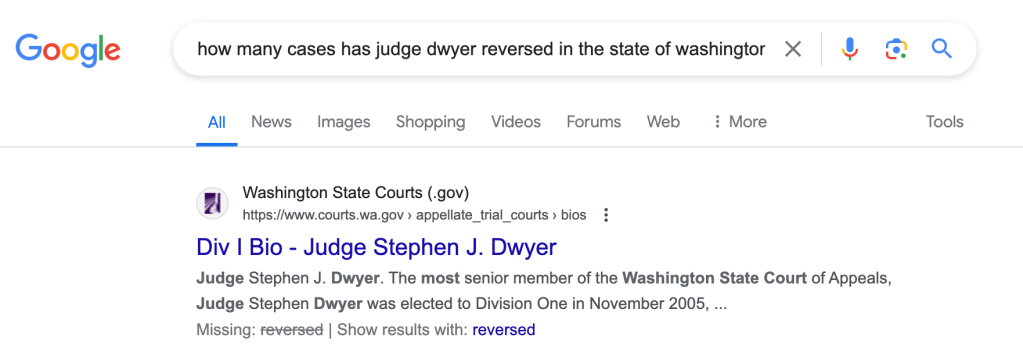
Nice try Google, but not helpful.
Step 3 – I know what you are thinking next…of course, chatGPT knows it all. Let us give that a shot.
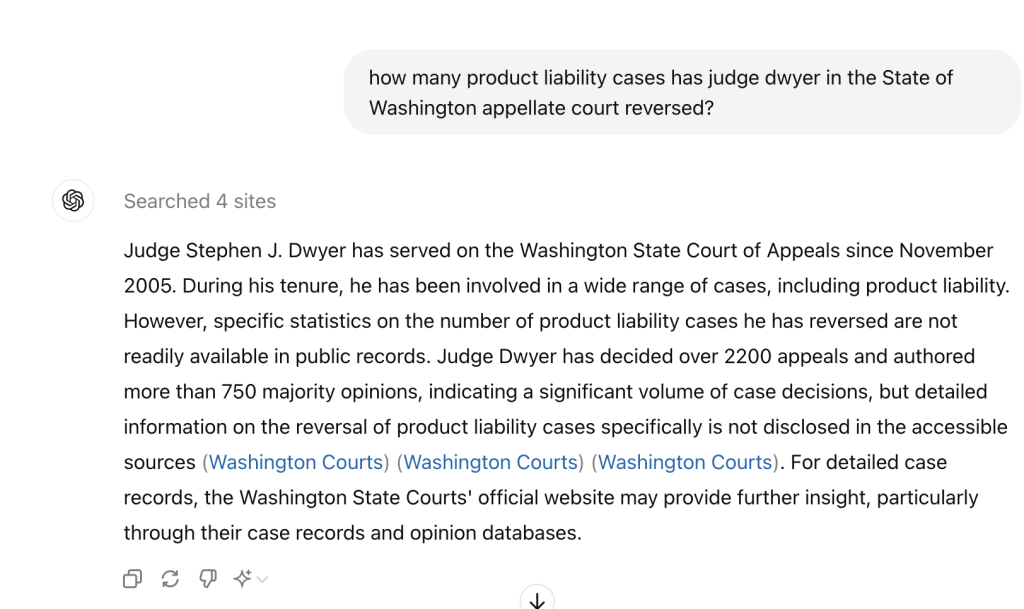
I thought chatGPT knew everything…hmmm
Step 4 – Let us try the next step. Let us go to the State of Washington’s Division 1 page.
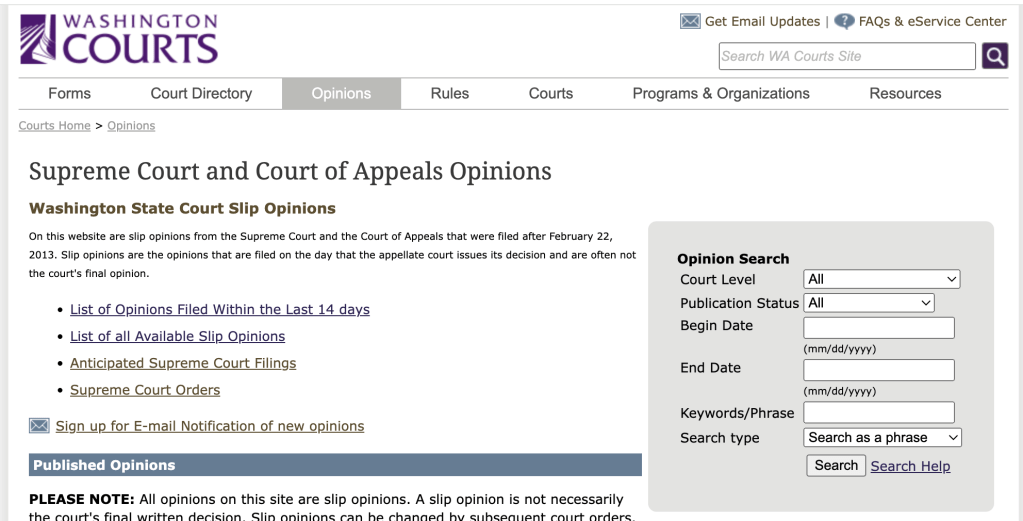
Now we search for Judge Dwyer in court of appeals – 20 minutes into the exercise, the associate must be getting really close. Drumroll…
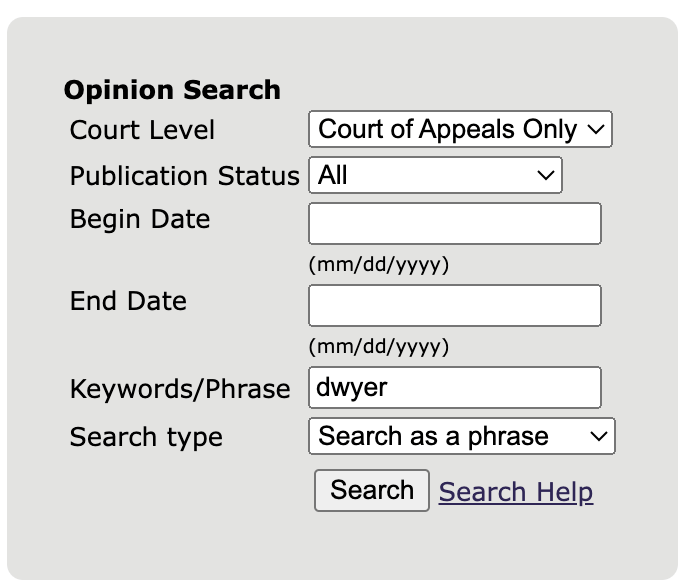
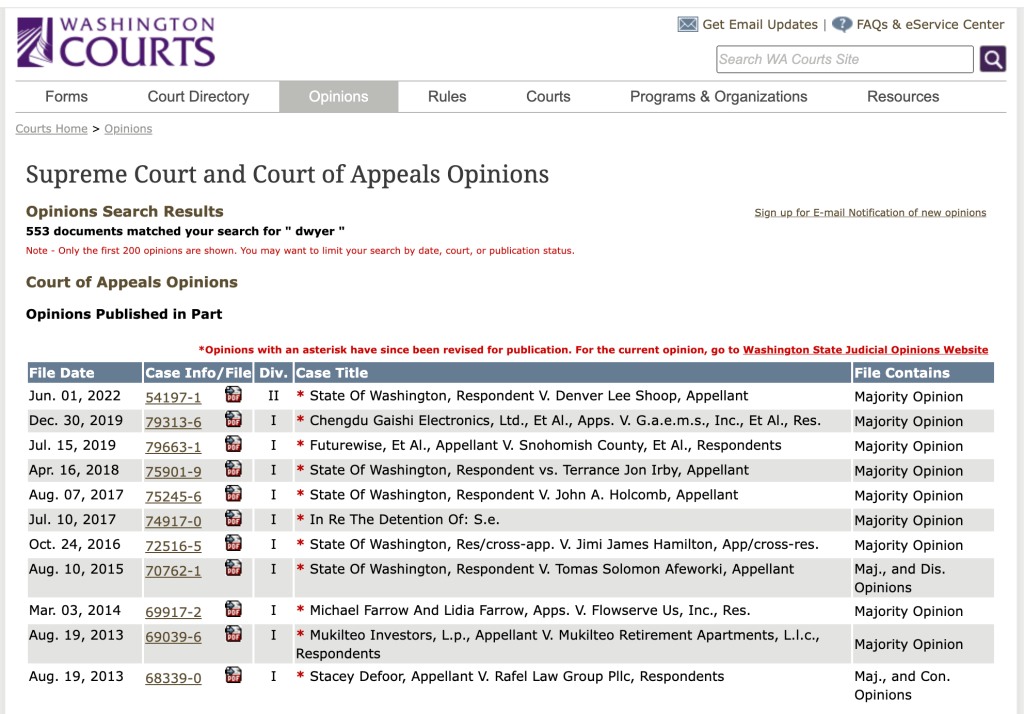
Wait, now I have to count that? Was the defendant Mr. Dwyer or was the judge the person I am looking for?
Step 5 – Perhaps you can search the latest PE-backed companies that show court data across many jurisdictions in the United States.
The associate spends another hour digging.
About six hours into the task, after missing dinner, the junior associate goes home. A short night of sleep later, the young lawyer goes to the partner the next morning and admits defeat in the simple task.
Here is potentially what DELIA could show in seconds:
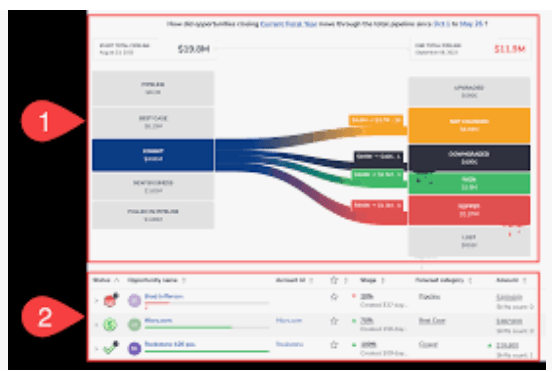
The image above is an illustration from a completely different industry. However, it is exactly how simple the question from the partner should be answered. Starting from all appeals cases in the State of Washington, to only those where Judge Dwyer was on the panel, to then environmental cases and then reversals and perhaps even the individual arguments within such cases. How would that answer impress the partner? And how much would it impress them if the associate produced the answer in 5 minutes?
DELIA is a collection of intelligent agents. The platform is in stealth-mode and aims to get that junior associate back home for dinner with their loved ones. We are looking for early adopters.
Contact Adam if you are interested.
 Empirical SCOTUS